Right down there, down below in the depths, at the very bottom of this blog page, should appear a footer area. A WordPress widget area for various instruments to fill up virtual space with virtual stuff. I say it should appear, as it does today, June 17 2014, on this current theme I’m using. It may not appear in a future theme, should I change it, but the particular widget I’m referring to may then appear somewhere else.
And, said widget is supplied by an external site that provides a live traffic feed of visitors to my blog as and when they happen. In a roundabout way. A few weeks ago, I was visiting my blog via my mobile phone. I was still in Cheshire, over towards the Manchester side of the county, but the widget said I was visiting from California somewhere. Slight difference country-wise but hey, who’s really checking?
The thing is, I was. And I was checking again today.
I noticed that I’d had a visitor, according to the widget, from a place called Warboys, in the United Kingdom. A village I’d never heard of.
It isn’t really surprising that I hadn’t heard of the village, there are probably thousands dotted about this green and pleasant land, but sometimes I have a vague recollection of a place from my days of torture when I worked on Directory Enquiries. The place name itself jingled a bell, although slightly out of tune. Warboys reminded me of the people who made the oldie worldie road signs here in the UK before they were streamlined.
How wrong was I. Worboys was/were the committee that altered the appearance of the UK road signs, making them more universal than they used to be. They introduced symbols onto the signs, straightened out the odd wonky arrow or two and created a new font especially for the road signs themselves. All this was introduced on January 1st 1965, but to this day, in places up and down the land, there still exists some pre-Worboys signs.
The village of Warboys may have one or two, but apart from sounding similar the two don’t have anything in common whatsoever.
Only, now they do.
Signs.
Warboys has a link to my 1642 Quest. And witchcraft.
A trial took place in the latter 1500s of a family who had been accused – by multiple people – of partaking in the act of witchcraft. Alice Samwell, her daughter Agnes and husband John were all found guilty in 1592 of committing murder by witchcraft, and consequently hanged. Their ‘victim’ was a certain Susan Weeks as was – or Lady Cromwell as she was by then – who had visited Warboys in 1590. Lady Cromwell had had reason to call Alice a witch for some reason, and as a result she managed to cut a lock of Alice’s hair so it could be burned, which at the time was thought to be a way of weakening a witch’s powers. Unfortunately for Lady Cromwell, she was soon to fall ill after suffering nightmares after cutting the hair, and she died in 1592. Unfortunately for Alice, her words to Lady Cromwell “I never did you any harm as yet” came back to haunt her, as they were used as the proof that hammered the nails into her and her family’s coffin at the trial.
In 1604 the Witchcraft Bill was introduced through parliament, partly influenced by this trial.
And the link to 1642? Lady Cromwell was Oliver Cromwell’s grandmother by marriage. She was married to Oliver Cromwell’s grandfather after his first wife had died.
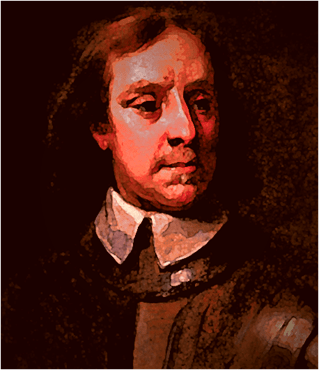
OK, it’s a weak link to 1642, but it’s still a link. Sometimes it’s the weakest link that’s actually the strongest.
It still doesn’t answer my questions as to why I’m drawn to that particular year, but there is still something there, if, after all this time of snippets of information popping up occasionally, they still continue to do so.
I don’t ‘feel’ witchcraft when I ‘remember’ 1642, and I still see the ships and the seas when I think about it… but if the signs are there, the answers must be there also. Hidden. But there…


Would you like to leave a comment?