Distance is nothing and size doesn’t matter, all things considered.
Well, it is and it does, obviously, but when you think of the vast distances involved in the Universal side of things the overall meaning of the word distance / size becomes somewhat diminished.
Take the distance between stars, for instance. They need to be so far apart from each other that they don’t affect the gravitational pull of their nearest neighbour – including any orbiting objects, planets and satellites as well. Vast distances indeed.
Yet, the distances must also be balanced, to keep the stars roughly where they are; and in some cases in their orbits of other stars (in the case of a binary or triple star system) so the stars can be free to live their lives and dance their days within the space provided by, erm, Space.
The closest star to our Sun, Proxima Centauri, is about four and a quarter light years away (a light year being approximately six trillion miles away – it doesn’t seem so far when you think in miles, does it? Although I’d hate to have to run it myself!). Proxima Centauri is part of a triple star system, together with Alpha Centauri A and B, and over time, due to the orbits of the three stars, Proxima Centauri (also known as Alpha Centauri C) will be the furthest of the three stars away from our Sun.
Until their positions alter, Proxima Centauri is a prime candidate for interstellar travel, with it being so close. One of it’s neighbours, incidentally, Alpha Centauri B has a newly discovered planet orbiting it (discovered in 2012). The planet is about the size of the Earth, but orbits its Sun a lot closer than we orbit ours. It is classed as being outside of the habitable zone, but that’s only by our standards! Currently called (by us) Alpha Centauri Bb, it has an orbit of three Earth days, so its years pass pretty quickly indeed (and we think time flies here!).
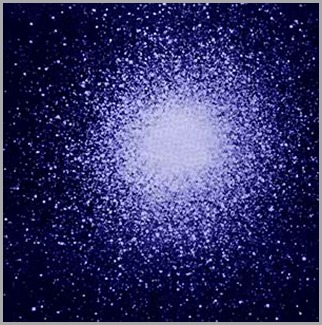
A little closer to home, about a quarter of the way (one light year / six trillion miles) to Proxima Centauri, there’s a large cloud of cosmic dust and ice, which also serves as the boundary to our solar system. This cloud is called the Oort Cloud, named after the Dutch astronomer Jan Hendrik Oort (1900 – 1992). It is believed that this cloud is the source of Halley’s Comet, among others.
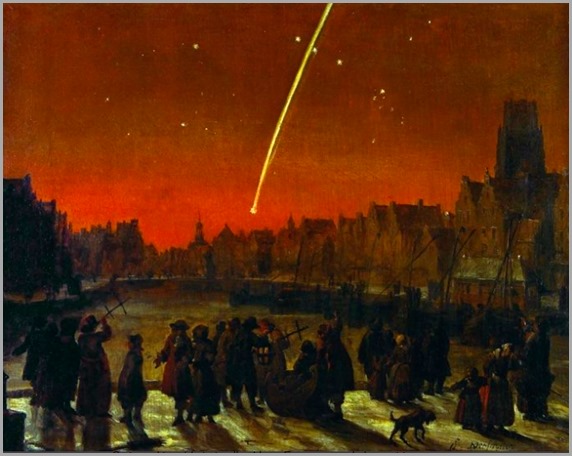
A new comet from this source is heading our way! Called Comet Ison, or officially C/2012 S1 (as Ison is the name of the telescope that discovered it!), it is said to be very similar to the Great Comet of 1680 which was actually visible in daylight (which I’m sure you all remember!). It won’t reach us until the end of this year, November / December time, but it should be visible to the naked eye between October 2013 and January 2014… being closest to us on December 26th. We are also expected to pass through the comet at some point, which will mean we should get to see some fantastic meteor showers at that time.
So, in just under a year from now, and from a light year away, the Universe will be providing us with a nice little show. Hopefully a spectacular one, weather permitting.


 The Mansionic Perspective
Leave a reply to penpusherpen Cancel reply