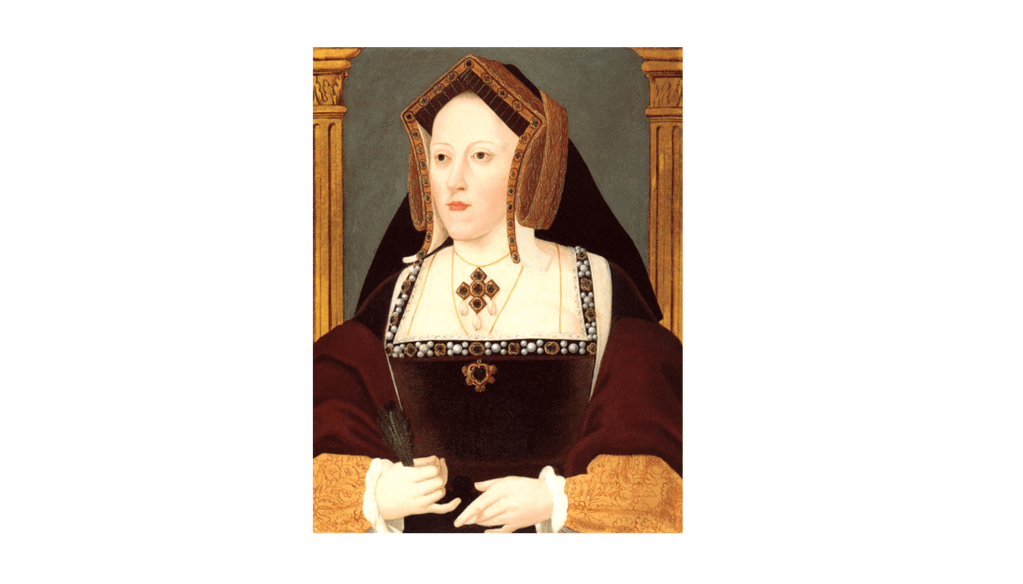
You’d think having links to the European Royal Families of the early Sixteenth Century would work wonders for your self-esteem, wouldn’t you? And you’d think with such connections, you’d work hard at keeping them going.
Leading up to 1515, a rather significant tailor, Edmund de Chaucery, had the European Royals eating out of his hand. He could acquire the most luxurious materials at almost a moment’s notice, and conjure up the most dapper of threads within a matter of days.
He was so popular, his fashion was what all the anybody-who-was-somebody at the time needed to be painted in.
Massive shoulders tapering down to fine waists, hidden pockets topped off with feathers, encrusted jewels and chains, and embroidery were all the rage – and that was with the menfolk! Not to be outdone, the women wanted similar, but silkier clothing.
Edmund was a cousin of a friend of a friend of Catherine of Aragon’s sister, Joanna.
Joanna’s late husband, Philip, was the son of the Holy Roman Emperor, Maximilian I, who had recently allied himself with the King of England, King Henry, and it was through this alignment that Edmund met Henry.
Henry loved the style of Edmund’s clothes, and requested that he make at least twenty such outfits fit for the King. Edmund agreed, but not before Catherine warned her husband that Edmund wasn’t very reliable.
Never the less, Henry went ahead with his plan, and paid Edmund an undisclosed amount upfront for the materials, which, true to his word, Edmund acquired.
Edmund created two outfits for the king in two weeks, and then vanished with the remaining materials and money.
Three weeks later, the Governess of Florence, Alfonsina Orsini, wrote to King Henry to declare her outrage at the fact that the King’s personal tailor had approached her with a promise of creating a special gown for her to wear at a state function, which never saw light of day. She never saw her materials or her money again, and as such had to attend the function in an old frock. She demanded that the King do something about it.
The King, with other matters to contend with left things as they were, hoping there wouldn’t be any tensions between England and Florence. After losing so much money on his clothing, he didn’t want to spend any more on yet another war.
Throughout England at the time… and Scotland, Spain, Italy and France… noblefolk everywhere were lining up to be painted in their refinery created by designers who emulated Edmund de Chaucery; all with a similar tale they didn’t really want to share… a tale that ended with them being out of pocket, both financially and fashionably.
And in one small part of Northern England, a man was quite comfortably settling into his castle, where he was king. Every now and again, he would dress in his refinery, made from the finest materials from across the lands, and count his pennies. By candlelight that is, as he didn’t want to be seen.
Edmund liked to keep a low profile. He wasn’t as difficult as people thought he was, he just liked what he liked, and had to go about getting it as best he could. Only, he was good, and he knew it.
And so did the European Royal Families of the early Sixteenth Century. And the noblemen. And the friend of the friend of his cousin who gave him the idea in the first place.
***
Well, I think that’s who the ‘king’ was in the last post, anyway…


 The Mansionic Perspective
Would you like to leave a comment?